If you’ve ever opened a set of AV proposals and thought, “How am I supposed to know which one is right for my event?” — you’re not alone.
Most planners aren’t AV experts. And you shouldn’t have to be.
Your job isn’t to pick the cheapest number or dissect every detail. It’s to choose a proposal you can trust—one that delivers the outcome you want without show-week fire drills or the dreaded “that wasn’t included” conversation halfway through planning.
The good news: you don’t need to be an AV expert to choose confidently—you just need a clear way to evaluate the plan behind the price.
Below is a simple, step-by-step process you can use to confirm whether an AV proposal is realistic—and where to look when proposals don’t line up.
The real question isn’t “Why are these numbers different?”
It’s this:
Is this price realistic for the event experience we’re trying to deliver?
A proposal can be “off” in either direction—or simply different for legitimate reasons. A lower price may reflect missing scope or support, but it can also come from efficiencies like shared labor from a back-to-back event at the same venue, or a strategic bid when your dates align especially well with an AV company’s calendar.

Copy and Paste This as part of your RFP
Please provide a Total Proposed Cost and a topline breakdown by:
- General Session Equipment
- Breakout Equipment
- All Other Equipment (ancillary/support spaces)
- General Session Onsite Labor
- Breakout + Ancillary Onsite Labor
- Set & Strike Labor
- Travel / Per Diem / Technician Expenses (if applicable)
- Pre-Production / Planning Labor
- Any Other Charges (please specify)
Vendor must confirm that all category totals reconcile exactly to the Total Proposed Cost submitted in the proposal.
The steps below help you understand why proposals differ—and where to focus your review.
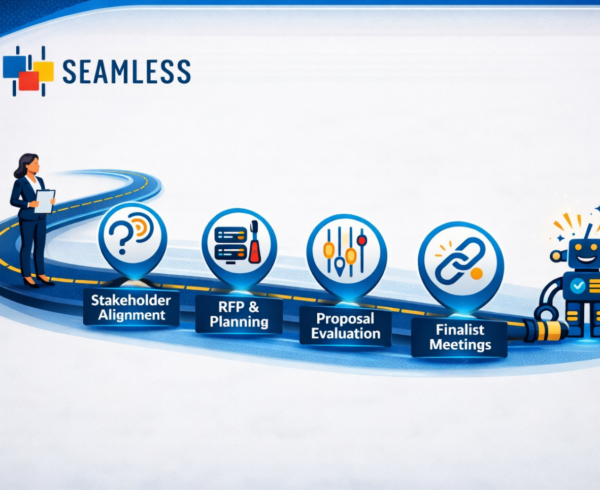
Step 1: Start with the big buckets (not line items)
Most planners don’t want to wade through pages of equipment lists. They want to know:
- what’s included
- what’s missing
- whether the plan will actually work onsite
The fastest way to get that clarity is to organize each proposal into major show elements first. This immediately highlights where the biggest differences are—and which sections deserve a closer look.
Example Topline Buckets for Conferences:
General Session Equipment
This is usually where the biggest swings happen. Differences here often reflect service level, production value, or added support elements (scenic, upgraded displays, teleprompters, green room setups) that may—or may not—be necessary.
Breakout Equipment
Breakouts are often similar across vendors. Large differences are worth questioning to ensure everyone is quoting the same outcome.
All Other Equipment (Ancillary / Support Spaces)
Registration, rehearsal rooms, evening events, overflow, board rooms, signage monitors—these are easy to under-scope and frequently become “surprises” later if not accounted for upfront.
Onsite Labor
Labor is where service levels and risk tolerance show up most clearly. One company may include dedicated coverage for key roles; another may combine responsibilities. Neither is automatically wrong—but you need to understand the assumptions behind the plan.
Helpful labor sub-buckets:
- General Session Onsite Labor
- Breakout + Ancillary Onsite Labor
- Set & Strike Labor
- Travel / Per Diem / Technician Expenses (if applicable)
Pre-Production / Planning Labor
Some companies bundle planning into the overall price; others break it out. Either approach can be valid—the key is understanding how much preparation is actually included.
Other Charges
Freight, rigging, power distribution, broadband, etc. These are often legitimate. What matters is whether they’re visible and understood.
This keeps your review focused on what actually drives the attendee experience—without getting lost in the weeds.
Step 2: Do a quick “reality check” comparison
Once proposals are organized into the same buckets, the story behind the numbers usually becomes clear.
If one proposal is lower overall:
It may be quoting tightly to the RFP while others include additional support to make the show run smoothly. Or it may reflect real efficiencies or calendar advantages. A lower price doesn’t automatically mean more risk—but it does warrant a few clarifying questions.
If one proposal is higher overall:
It could indicate over-scoping—or it could mean the vendor identified venue constraints, schedule realities, or support needs others missed. Higher doesn’t automatically mean better, but it often signals a more conservative (and sometimes more resilient) plan.
Step 3: Find the “gap category”—then go deeper there
You don’t need to review every section equally.
Once you compare buckets, there’s usually a clear outlier:
- general session labor is dramatically different
- breakout or ancillary labor is unusually low or missing
- set & strike assumptions don’t match the schedule
- pre-production is significantly higher in one proposal
- “other charges” vary widely
That’s your roadmap.
Start where the difference is, then review that section closely and prepare follow-up questions.
This is how you stay efficient—and confident.
Step 4: Pressure-test labor realism (the fastest indicator of success)
Most AV issues onsite aren’t caused by equipment. They’re caused by:
- not enough technicians at the right times
- unrealistic load-in or load-out assumptions
- inadequate show coverage for program complexity
- too little support when content or schedules shift (which they always do)
When labor is under-scoped, everyone operates reactively. The AV team is chasing issues, and the gap often gets filled by the planner—escalating fixes, flagging problems, and staying close to production instead of focusing on the broader event.
On a tight budget, that may be a tradeoff you’re willing to make—but it’s worth going in with eyes open.
A realistic labor plan is what lets you stop managing AV minute-by-minute and stay present for your stakeholders.
Step 5: Use finalist conversations to confirm the plan—not defend the price
Once you’ve narrowed to finalists, the goal isn’t to debate line items.
It’s to confirm:
- how they’re thinking about the event
- what assumptions they’re making
- how they prioritize support
- how they prevent show-week surprises
If you want a structured way to guide that conversation, we’ve outlined a planner-friendly approach here:
Read: How to Run an Effective AV Finalist Interview (and What to Listen For)
The right finalist conversation confirms you’ll have a team onsite that can make good decisions in real time.
That’s when planners stop guessing—and start leading.
Make it easier with a comparison worksheet
Many planners use a simple comparison worksheet to organize proposals before finalist interviews—and some ask us to sanity-check assumptions or talk through tradeoffs before making a final decision.
If you want a tool to structure your review, you can start here:
Use it to:
- compare proposals consistently
- identify the main drivers of cost differences
- pinpoint where deeper review is needed
- ask smarter finalist questions
Bottom line: you’re not choosing a number—you’re choosing a plan
Evaluating AV proposals isn’t about becoming technical overnight.
It’s about confirming the pricing reflects:
- a realistic scope for the experience you want
- a labor plan that will hold up onsite
- a support model that protects the event—and your role as planner
When you evaluate proposals this way, you don’t have to guess.
You can walk into show week knowing your AV partner has a plan that will deliver—so you can focus on the event, not the production.